Femur
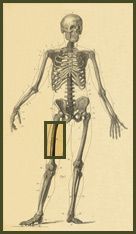
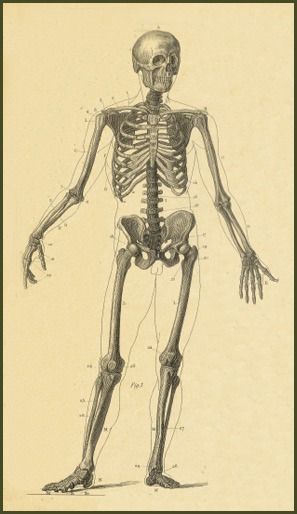
The femur is the largest bone of the human skeleton and provides the structural support of the thigh. The top of the femur is spherical (femoral head) and comprises the ball portion of the ball-and-socket hip joint. The femoral shaft is a tubular bone that runs from the femoral head above to the femoral condyles below. These condyles make up the upper portion of the knee joint.
Nearly all fractures of the femur require operative stabilization. Fractures of the femoral shaft are most commonly stabilized with a metal rod placed in the central medullary canal. Fractures of the top and bottom portions of the femur are most commonly stabilized with plate and screw fixation or a metal rod placed in the central medullary canal.
Whereas most femur fractures will successfully heal with proper treatment, those that fail to heal (a femoral nonunion) represent one of the most challenging situations in the field of Orthopedic Traumatology. An even greater challenge exists when the nonunion is accompanied by infection, bone loss, deformity, foreshortening or other compounding problems..
Femur Problems Treated by Dr. Brinker
| Problem Types | Number of Surgical Cases | |
|---|---|---|
| Fracture Nonunions | 232 | |
| Infected Nonunions | 18 | View Case Studies |
| Deformities | 86 | View Case Studies |
| Complex Fractures | 147 | View Case Studies |
| Bone Infections | 27 | |
| Periprostetic Fractures/ Non unions | 48 | View Case Studies |
| Limb Lengthening | 27 | View Case Studies |
*This chart does not represent all of Dr. Brinker's Cases.
Texas Orthopedic Hospital
7401 Main St
Houston, TX
77030
Make An Appointment
Maps & Directions
Need An Expert Opinion?
Patient stories
Choose Your Affected Bone/Joint